
Dumont Butte Renaming on Hold for Now
This news article is also featured in the March edition of the Cow Creek Tribal newsletter. Click here to view the current edition, as well as archived editions of the Tribal newsletter (login required).
In an effort to remove the names of landmarks on federal lands that utilize derogatory names, the United States Forest Service has assembled a task force to review and generate new names. The only problem is that this effort has delayed all nominations for new names that had been previously submitted, including a proposal by the Cow Creek Cultural Resources Program to rename a Tribally-significant mountain to “Dumont Butte.”
The mountain bears the name of a derogatory word used by early settlers to denote Native American women, one of many terms intended to de-humanize native peoples.
“It was used primarily to make people seem less than human, so that there weren’t any emotional or ethical consequences to stealing land or killing people,” says Jeremy Johnson, Cow Creek Cultural Resources Programs Manager. “The Cow Creek people, and native Americans in general, have a long and terrible history of being viewed as less than human. As such, it is very important to try and remove these words, and remove any connotation that goes along with it, so we can tell the true Tribal story and remove the hate.”
The Tribe’s Cultural Resources Program first became involved in the process of renaming these landmarks in 2009. Initially, this particular mountain has had three separate proposals for a new name. The first two were Sacagawea Mountain and Ford Mountain, which were denied, as neither honor the Cow Creek
Tribe, in whose ancestral lands the mountain falls. Three years ago, Johnson selected the name “Dumont Butte,” as it was near the headwaters of Dumont Creek and named after a Tribal family, and submitted his own proposal to the U.S. Board on Geographic Names for consideration.
The new name was scheduled for review when the U.S. Forest Service implemented its task force and pulled all current proposals so that all derogatory names could be reviewed and renamed. While Tribes will not be consulted directly by the task force during the renaming process, there will be a 90-day public comment period after the names are selected. Johnson will also be working internally to suggest name replacements, and submitting rename packets for each landmark separately as needed.
Though the Cultural Resource Program is involved in providing cultural activities for Tribal members, the majority of its work happens behind the scenes on broad-reaching efforts to change the perception of Tribes. Culture staff teach at schools or government offices, provide a native perspective with federal land management, protect archaeological sites, reviewing histories for cultural sensitivity, and much more.
“It’s important to know that there are people trying to make this better,” says Johnson. “We try to ensure that the Tribal story is told in a light that is truthful, and which will protect our cultural identity.”
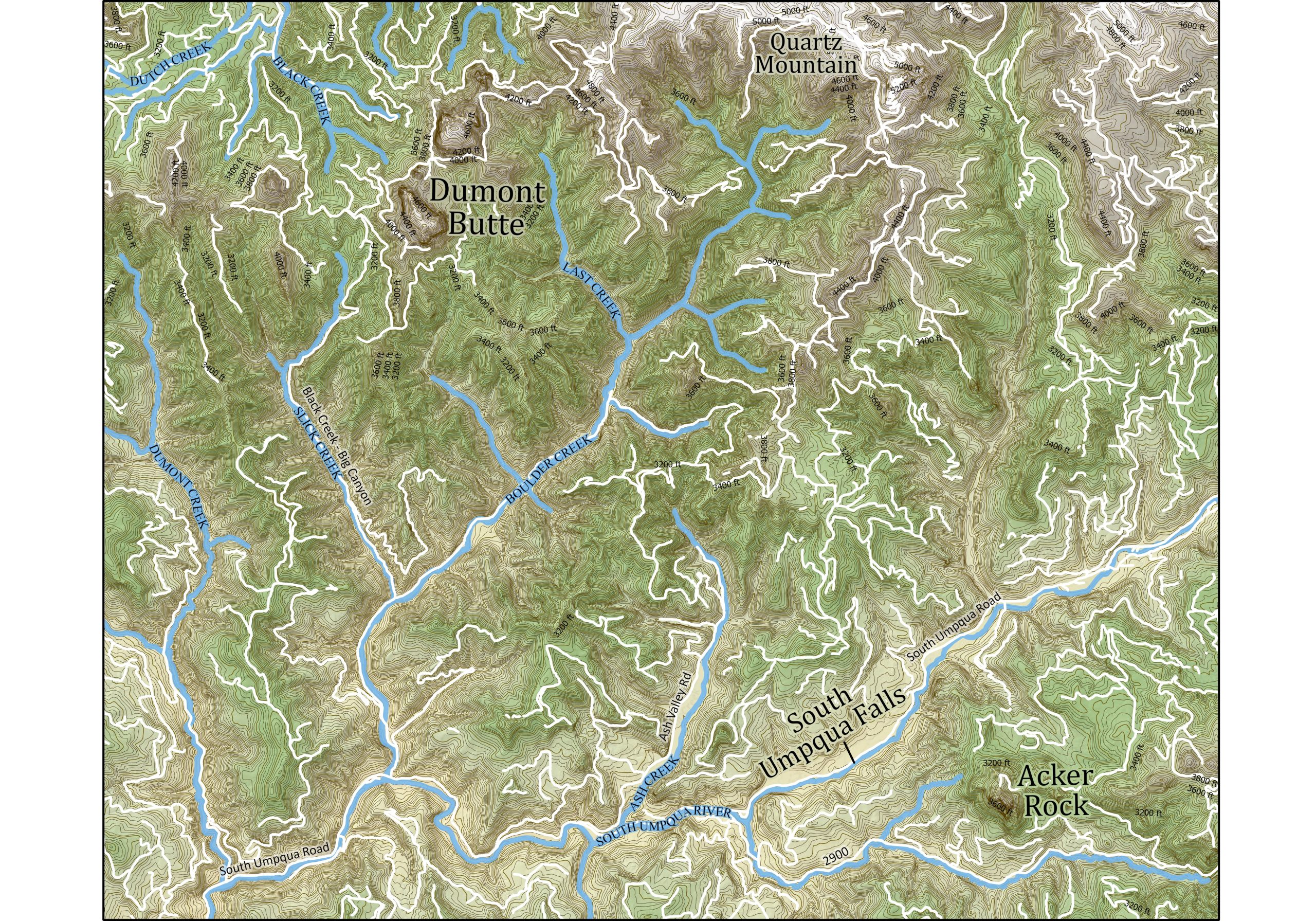
Cow Creek GIS Technician Taylor Allen generated this map of the location of the proposed “Dumont Butte.”